Showing posts with label Literature. Show all posts

Friday, February 3, 2012

Poetic Prose: The Seemingly Nonsensical Logic of My Disquieted Mind

So many thoughts lingering in my mind, at the tip of my tongue, waiting for my lips to form the words that would breathe the sounds to life. I'm living in a mess of indigos and violets, my poetry blurring into my prose. I haven't felt this way about writing in a long time.

How does one convey emotion through images, rather than merely tell?

Perhaps that's precisely what has been troubling me about my writing. I have the paintbrushes, the paints, and the canvas. Perhaps I need to trade in these old specs for a new set of lenses. Maybe I just need to hone my brush strokes. Or maybe...

Maybe I just need to get my hands to stop shaking.

I flip through old diaries, the paper cracked and crisp betwixt my fingers, until I feel peeled and distant from the teenage girl who authored them. I slam each diary shut. I wish for a furnace, but burning these well-worn leaves won't stamp out the invisible imprints that the past has branded in my mind. But that teenage girl, the one who bared her ideas on those personal pages, will forever remain a part of me. She's grown up and she's moved beyond the silly narration of those pages (I can only hope).

I stare at empty pages as my thoughts dance in circles, waiting for my voice to give them weight. Instead, they linger, waiting for an unassuming passerby to catch the barely audible whisper.

So this is my journal of discontent, my heart's manifesto, the seemingly nonsensical logic of my disquieted mind.

Clearly, I still have a lot of figuring out to do. I won't cross my fingers, though. I need to write.


Saturday, July 30, 2011

Evaluation: Ascertaining the Value of Something

I feel like most of my energy's been zapped out by the summer heat. Not that I'm complaining (much). I've been spending most of my days inside an air-conditioned office building. Today was actually the one day I wore a summer dress and forgot to stuff a sweater into my bag for later use. So you can just imagine me getting goosebumps and shivering while trying to keep track of the name of the last participant whose attendance information I've entered into the database.

With my internship well under way, I'd say that this summer's been really productive so far. My days thus far consist of entering data into the organization's database, creating statistical reports and tables, and assisting my supervisor in training the coordinators and youth advisors on how to use the database and create reports. My supervisor is really nice and incredibly helpful, and it turns out that she also studied psychology in college. I never even knew that there was such a thing as evaluation research until I started this internship. It's a LOT of work.

Working with a database sounds exciting at first... until you actually sit down and force yourself to be patient with your eyes straining to follow the rows on the Excel spreadsheets while clicking back and forth among multiple windows. You really need to have the patience for it. Sometimes it can feel like mind-numbing work, but it's well worth it. Evaluating the efficacy of a social service program is vital to understanding how that program can better serve and meet the needs of their often under-served target populations (such as at-risk youth). Evaluation research is tricky, though, as there is no specific standard against which you can compare your program's outcomes. Sure, you can use SAT scores, TABE scores, GED attainment, and high school graduation rates as various measures of participant progress and success, but you still need to compare these scores to a set of standard values. You as a stakeholder/program director/evaluator have to determine what that standard should be. Sometimes, you just have to work with what you have and decide what's best for the program and the people you're serving in that program. It's gotten me more interested in actually pursuing a master's degree in educational psychology, which would allow me to learn more about program evaluation and how to apply statistics in improving how these programs deliver their services.

I never thought I'd be involved in doing such work, since I've always struggled with math. To this day, I still depend on my calculator as the arithmetical extension of my brain's central executive functioning. So what the fudge am I doing working with numbers in statistics?

To tell you quite truthfully: I don't know. Working with that uncertainty, though, hasn't deterred me from wetting my feet into trying something I never thought I'd be doing because of my slight numbers anxiety. But I'm ready and willing to learn.

Just recently I attended a leadership training seminar with the girls from my local IORG assembly. One of the guest lecturers who shared his knowledge on public speaking said something striking:

"Happiness is not in liking what you already like to do, but in learning to like what you have to do."

It took me a while to let the words sink in my head. I was sitting there going like, "HUH?!" in my frazzled state of mind. Liking what you have to do? But after thinking about it for a bit longer, I found it to be true. You just have to breathe. No matter what you end up doing, don't ever forget to breathe. Then take one step at a time, no matter how tiny the distance to your next footstep. Every victory counts -- yes, even the tiny ones you thought were measly attempts. They count, too. You can't conquer a challenge if you don't first divide it.

Anyway, enough with the metaphors. Sometimes you just have to try something in order to get the hang of it, much like analyzing data through statistical means. I didn't like doing it in my stats class and in my experimental social psychology class, but I stuck with it. Surprisingly, I got an A- in stats and an A in that experimental psych class. I wouldn't trade those months of sleepless nights and stressful freak-outs over deadlines for anything in the world. Not even if you bribed me with lifetime supplies of mouth-watering cheese puffs and addicting veggie straws. Not even if you had the magical powers to make Henry Cavill fall madly in love with geeky ol' me. I still wouldn't trade any of it.

Right now, I'm still exploring the possibilities. My possibilities. I know for sure that I want to pursue a master's degree in psychology. Which particular area of psychology I should specialize in is the million dollar question that I've been struggling to figure out lately. Clinical psych? Developmental psych? Educational psych? Forensic psychology? They all seem so fascinating. Choosing just 1 area to study strikes me as a daunting task. I'll be a college senior in the upcoming semester. If I want to get a clear picture of what my future looks like, I'd better get moving. For now, I think I'm going to apply to a couple of masters programs in educational psychology and maybe to a program in mental health counseling or social work as my back-ups. I'm going to have to set up another appointment with the career development services offices at my college and with one of the graduate school advisors. So much to do in so little time...

And so few breaths to do all of it. Lately I've been suffering from a sore throat, slight dizziness, and fits of coughing that keep me up at night. It's annoying and it hurts. Word to the wise: don't drink icy water during a summer heat wave. Your throat may seize up with soreness and plague you with a week-long unpretty coughing fit.

I didn't go to my good friend Liliana's 21st birthday bash last night because I couldn't breathe and my mother accompanied me to the ER. I didn't even go with my sisters and the other members of my youth organization to do our scheduled fundraising event today because I felt so weak when I woke up this morning. Though the scratchy soreness in my throat is gone, I still feel something heavy blocking my windpipe. It builds up to the point that I'm coughing vigorously, so much so that sometimes I feel like throwing up. Just a couple of days ago, I threw up my breakfast because I was coughing so much. The ER physician assistant at the local hospital said that I had an upper respiratory viral infection and that I would just have to treat the symptoms of a sore throat with cough drops and my dizziness with acetaminophen. He might as well have just told me to simply deal with it, because I've already been eating so many cough drops, drinking hot herbal tea, and taking Tylenol whenever I feel dizzy with a headache. I need to get better soon... I can't deal with the painful coughing fits in the middle of the night. I can't deal with this ridiculous pain, PERIOD.

Plus, it would totally seem flaky if I cancelled on a certain person. On the other hand, if I show up and I'm still feeling like my trachea's closing up, then that would be bad. I don't want him to get sick on account of me. He doesn't deserve that.

Yeah, you guessed it -- I finally asked him if he wanted to hang out sometime. Of course, that was before I developed this stupid upper respiratory problem (God, if you're out there, please let me be 100% cured by Monday!).

Not that we have a set day of when we're hanging out. I don't even know if he's still into the idea because he seems so busy. I didn't even think he'd agree to it in the first place. He seems eager to meet up and told me he'd let me know when he'd be free, but I don't know... I guess we'll just have to see what happens. If everything works out, then great!  "There may be something there that wasn't there before," as Mrs. Potts from Beauty & the Beast would say.

But if by chance things don't work out... then whatever, I guess. I wouldn't know how to evaluate whether taking a chance on him would really be worth it in the end. The way I see it, you can't lose what you were never sure you had in the first place. I'd like to think he's worth the brain power and the effort, but in the end... that's up to him.

Anyway, I still have to grad school to worry about and a book to finish writing. Regardless of what happens, this girl's braving the next day as if it was her last. (Still crossing my fingers, though!)

Poor flowers.

More updates soon. By the way, did I mention that I read some really cool books lately (just finished I Was Told There'd Be Cake and am now reading The Hunger Games)? Or that I'll be going with my family on a five-day vacation in DisneyWorld in August? No? Then I shall cover these topics in my next posts!

Until next time, stay healthy and keep your chin up, dear friends. You might find a wisp happiness where you least expect it...


Like in a bowl of yummy, hot, comforting chicken noodle soup and soothing honey herbal tea. :)

Wednesday, May 25, 2011

Central Park: A Natural Haven for the Harried College Student and Aspiring Writer

After more than a week of cold, depressing rainfall, the sun finally peeked through yesterday afternoon. I think that's part of the reason my previous post was a little gloomy and pessimistic in its tone. I guess you can say that I was sunshine-deprived and was in withdrawal last week. Now that the weather's changed, so has my mood. Funny how nature can affect you in these kinds of ways.

I handed in my philosophy final yesterday. As soon as I did, I felt a huge wave of relief wash over me. I couldn't help but feel light and happy. That probably says a lot about how I've been feeling this entire semester. I haven't had much time to really relax. There were too many deadlines (I hate that word) to worry about and too many little things that kept nagging me, especially the little things that came to planning the next steps towards my future. Forgive my bluntness in saying this, but seriously. Thinking about what's going to happen after I graduate next year -- that's some scary shit right there! I didn't want to think about my college and post-graduate future anymore. I was badly in need of a break.

Since it wasn't raining and the weather felt nice, I decided to take my time in heading home. I took a leisurely stroll through the neighborhood around my college campus, relishing the cool summer breeze and city sights as I walked towards 5th Avenue and entered Central Park. There were a lot of people milling about -- nannies with curious little children, mothers with their babies, teenagers skateboarding down the paths, businesspeople punching messages through their Droid phones and Blackberrys, tourists huddled in groups and snapping pictures of the scenery. It felt weird that in the middle of all the honking and rumbling of vehicle engines, there sat this little slice of quietude and solace. Ducks quacked and waddled around The Pond as citydwellers sat in the soft grass and basked in the long-missed sunshine.

The beautiful, sunny, serene view of The Pond that faced me yesterday as I sat on a bench in Central Park yesterday.

It felt nice to sit down on one of the benches facing The Pond and just be. It felt like I no longer had anything to worry about. I mean, sure I still have that Spanish final to take on Friday, but the thought of it didn't seem as daunting as it used to seem. I chatted for a few minutes with my sister on the phone, feeling somewhat sorry that she was missing out on the beautiful weather (she'd been stuck in the dreary student lounge at her college, waiting for her number to be called in order to sort out her financial aid dependency status). Then I sat reading my book for about a half hour.

Stiff: The Curious Lives of Human Cadavers by Mary Roach takes on a lighthearted and informative approach to exploring what happens to the body after death, as well as recounting some of the major contributions that human cadavers have made in scientific medical research, forensics, and automobile crash-testing. It's an amusing, thoughtful, and enlightening read. My sister, whose interests include forensic science, recommended the book to me when she found out that I was researching the history of body-snatching for the backstory of one of my characters. Though I thoroughly enjoy reading Roach's anecdotal accounts of the cadavers she's encountered throughout her research in writing this book, I eventually had to lay my bookmark between its pages and close the book. Thinking about dead bodies and the process of decay during a sunny, warm, beautuful day in Central Park made me that much more grateful to be alive.

So I put the book down and just sat there on the bench, gazing out into the water, watching the ducks glide on its surface and the sunlight touch its own reflection in the gentle rippling motions of the water.

I spent the next hour and a half just listening to some relaxing tunes on my iPod as I thought about the setting for my novel, a fictional town in upstate New York that's near a mountain forest situated near the Hudson River. I don't visit upstate as often as I used to, so I can't always take in the lovely views of the state's natural landscapes during the long drives to Utica for the annual St. John's Day Masonic parade and festival. For the moment, this pond in Central Park served as some kind of haven, a place where one can get away from the crazy city life and just sit and meditate for a while.

I felt like a character from one of Jane Austen's or Oscar Wilde's works, like someone who came from a family that owned breathtaking natural landscapes around their estate and picnicked beside the serene pond that their mansion or country cottage overlooked. I felt special because the place felt special. Its ephemerality made it that much more precious to me.

West Canada Creek by the KOA campgrounds in Herkimer, NY
That spot by The Pond in Central Park became one of my favorite "happy places." My other happy places include the small creek by the Herkimer campgrounds where my family and I used to visit every year. Some people would go swimming in it and even go tubing downstream into the Mohawk River. My sisters and I never did any of those things, but we would walk along the bank, balancing on the wet soil and smooth boulders that graced the creek's edges. We'd squat down and dip our hands into the squishy mineral-rich creekbed to collect shiny, smooth, and interestingly shaped stones. I'd watch the little tadpoles and tiny fish swim away from us as we placed the heavier rocks back into the water. Sometimes there'd even be dragonflies flitting around us, searching for buzzing mosquitoes and water bugs to eat for its midday lunch.

My other happy place is also located in Central Park. While Turtle Pond isn't as pretty and as awe-inspiring as The Pond in Central Park South, the castle structure overlooking Turtle Pond sure is.

Belvedere Castle, named "beautiful view" in Italian, certainly lives up to its name as the site where many couples have exchanged their vows underneath its pretty gazebo (I've always wanted to get married there, too!). The castle is close to the Ramble and the Great Lawn, and it sits right next to the open-air Delacorte Theatre, where the performances for Shakespeare in the Park would take place every summer. Since the castle sits atop of Vista Rock, said to be the highest point in Central Park, Belvedere also serves as the Henry Luce Nature Observatory. You can go inside the castle and find some interesting natural history artifacts (skeletons and birds) on display. From the balcony spaces atop the towers, you can even bring out your binoculars and go birdwatching if you're into orinthology. I'm a bit of a pseudo-orinthologist myself, having done a little research on pigeons to get more background information for my protagonist (spoiler alert: she's supposed to morph into one at some point). It's harder to spot cardinals flying above among the tree branches, but with a little patience, you might catch sight of one nearby. Ducks and finches are also funny little creatures to observe, especially when they're watching you watch them. Call me a quack if you wish (haha), but I find birds as freaky as they are fascinating. They're highly intelligent and very social creatures, and they need our help in preserving their ways of life.

You might also catch sight of the smaller bird species amid the pretty benches and fragrant, colorful flowers in the Shakespeare Garden, which also sits beside Belvedere Castle. Famous quotes from many of the revered bard's works contribute to the charm and beauty of the garden's inspirational floral atmosphere. Belvedere Castle and the Shakespeare Garden always evoke a sense of serenity and wonder within my inner muse.

If you're in New York City and you need a break from the craziness of the city and the monotony of going to work or school, take some time out of your day and take a stroll through the scenic landscapes of Central Park. Take the time to sit down in the middle of one of these places -- whether it's at the Bethesda Fountain, at a table in the Boathouse, on a bench overlooking The Pond, or on the grass on the Great Lawn -- and just let your mind wander. Feel the sunshine's warmth cascade on your skin as you watch the rays caress the treetops and shrubs with its brightness. Feel the cool breeze gently kiss you with the scent of flowers and leaves beneath its invisible wings. Listen to the birds in the trees chirp cheerily. Watch the ducks and the geese glide gracefully along the water, creating ripples atop its surface. Close your eyes. Breathe in. Feel the fresh air enrich your lungs and soothe you as you breathe out. Repeat.

And above all, friends, don't forget to smile.

Until next time, this is yours truly,
J. Day

Tuesday, January 25, 2011

Precisely Why Any Writer Should Do Their Research

Someone on the TwilightSucks forum brought up some good points regarding the factual errors and lack of common sense in Rosalie's back story. I agreed with the commenter, and I also tried to explain why there is no excuse for lazy writing and lack of simple research on Stephenie Meyer's part, especially in a published work of literature.

"While in general I prefer the minor character stories to the main characters in Twilight, and while Rosalie is actually one of my favourite characters (though that concept is relative with this series,) I get irrationally annoyed by the fact that her brief story contains so damn many factual errors and common sense errors for such a short chunk of text.

I lived in Rochester for awhile.

Rosalie was planning an outdoor wedding in April! Um... riiiight. I mean I suppose you could, it's not like you would freeze to death, but it wouldn't be particularly pleasant for anyone. She seemed genuinely bothered by the possibility of having to move indoors. Plan for a different time of year, then, perhaps? I helped plan an outdoor wedding in the Rochester area for August and we almost had to use our rain plan but it cleared up in time. April? Nuh-uh.

The weather is implied to be unseasonable (again in April) because Rosalie was chilly walking home. No, that's normal, actually. It could even possibly have snowed, some years. It was weird to me that someone who had alleged grown up there found that weather unusual.

Does Meyer not have any idea what the climate of Western NY is? She seems to think it's the same as the Southwest! It definitely isn't!

Meyer also seems not to realize that our beloved Flour City/Flower City was actually a significant centre of industry early in the 20th century, home to Eastman Kodak, Bausch & Lomb, and quite a lot of garment manufacturing. Of course Rochester was affected by the Depression like everywhere, but the social strata were very different than what Meyer imagines, particularly with Eastman Kodak as an economic player.

*sigh*

If Rosalie's story was set elsewhere, I probably wouldn't have noticed. But once again Meyer's lack of research took me right out of the plot."

Obviously, Meyer has zero to no research skills.

If I were her, I would have double-checked on the historical data of weather and climate conditions in April for Rochester, New York. I live in New York City, but upstate New York (especially the western parts) is an entirely different area as you move further inland from the Hudson River and further up towards Lake Ontario. It would be quite reasonable to assume that the April weather in Rochester, New York would be colder than in, say for instance, New York City.

I would have gone to www.weather.com, entered "Rochester, NY, United States" in the search bar, scrolled down, clicked on a link on the right-hand side of the screen that says "Historical data" (located underneath the section "Today's high and low temperatures") and then looked at the average high and average low temperatures.

This page, for instance, tells you a whole lot of information for not only the average temperatures, but also the record temperatures and the usual daylight/sunset times:

http://www.weather.com/outlook/health/fitness/wxclimatology/daily/USNY1232?climoMonth=4

Then I would have clicked on the tab that says "April" and looked at the average daily and monthly temperatures for that month in Rochester, NY.

It took me less than two minutes to pull up that information. (The link might not work, so if you want to re-conduct the search, you may have to do the search manually, as I had just described.)

Based on that information, an outdoor wedding in April in Rochester, NY would not be a very bright idea. Everyone would still have to wear thick coats. What's the the point of having an outdoor wedding if you and your guests are only going to freeze and maybe catch pneumonia from sitting through an entire wedding ceremony?

A summer wedding, perhaps anytime between June through August would have been a better alternative.

Unfortunately, it never crossed Meyer's mind to do a simple research task in regards to setting and average weather conditions.

As for the historical discrepancy that Rosalie's family survived the depression because her father was a banker, Meyer should have known better. If she did not have an inkling as to the circumstances surrounding the Great Depression, the least that Meyer could have done was do a quick search on Google or Wikipedia on the topic.

I pulled these bits of information up in less than two minutes as well from this Wikipedia entry on the Great Depression:

There were multiple causes for the first downturn in 1929. These include the structural weaknesses and specific events that turned it into a major depression and the manner in which the downturn spread from country to country. In relation to the 1929 downturn, historians emphasize structural factors like massive bank failures and the stock market crash. In contrast, economists (such as Barry Eichengreen, Milton Friedman and Peter Temin) point to monetary factors such as actions by the US Federal Reserve that contracted the money supply, as well as Britain's decision to return to the Gold Standard at pre-World War I parities (US$4.86:£1).
and also this
 ...The Federal Reserve allowed some large public bank failures – particularly that of the New York Bank of the United States – which produced panic and widespread runs on local banks, and the Federal Reserve sat idly by while banks collapsed... If the Fed had provided emergency lending to these key banks, or simply bought government bonds on the open market to provide liquidity and increase the quantity of money after the key banks fell, all the rest of the banks would not have fallen after the large ones did, and the money supply would not have fallen as far and as fast as it did. With significantly less money to go around, businessmen could not get new loans and could not even get their old loans renewed, forcing many to stop investing. This interpretation blames the Federal Reserve for inaction, especially the New York branch.

If banks failed, then Rosalie and her family should have been poor. They would not be living in a comfortable house, throwing parties, or affording a lavish-style outdoor wedding.

Further internal and interpersonal conflict could have been infused into Rosalie's back-story and made the character have more depth had Meyer done any proper research at all.

All of it is failure and wasted potential because Meyer refused to get over her laziness and conduct proper research before or during the writing process. Even if Meyer was originally writing the story for her own entertainment (as most writers do anyway), then she should have considered that her storytelling could improve considerably with accurate historical data and basic knowledge of her chosen real-world settings.

Laziness should not be an acceptable excuse for poor writing, especially when any Sherlock with a modem or router connected to their computer can easily access any necessary information vital to the storytelling via the Internet.

Stephenie Meyer fails at not only simple concepts of biology, history, and research methods, but she also lacks common sense. How the woman ever managed to pass her classes in high school and college, the world may never know.

Monday, January 24, 2011

Hogwarts Professor: Discussions Regarding Jane Eyre

I thought that these links to the Hogwarts Professor website (which has a variety of articles on yes, Harry Potter -- as well many other works of literature and topics in popular culture) were interesting.

Jane Eyre is one of my favorite novels, perhaps one of the most empowering, one of the most provocative, one of the most remarkable, and one of the most romantic (by which I mean creepy, mysterious and breathtaking, not necessarily the lovey-dovey kind that bespeaks of flowers and chocolates) works I have ever read.

These articles might shed some new light on a classic novel, so I'm posting them here.

Jane Eyre 1: “Once Upon a Time in Thornfield…” Reading Bronte’s ‘Jane Eyre’ as a Fairy Tale


Jane Eyre 2: Genre and Gender Revulsion and Consequent Critical Disdain for Jane Eyre

Jane Eyre 3: “Plain Jane” and the Mid-Nineteenth-Century Ideal of Beauty, Complexion to Corsets

Jane Eyre 4: Edward (Cullen) Rochester, I Presume? Twilight’s Jane Eyre Roots

Jane Eyre 5: Crossing the Threshold with Jane—The Novel’s Liminal Elements

Jane Eyre 6: Faith and Fairies – Conventional Spirituality versus What the Heart Hears

Jane Eyre 7: A Lesson on Authorial Intent from Jasper Fforde’s Literary Detective Thursday Next

That is all the links, so far. I don't know if the authors of these Jane Eyre discussions will continue to write some more articles and post them, but if they do, I'll try to post those links as well.

Thursday, December 23, 2010

The Verdict on this Blog and Moving (Leisurely) Ahead

Okay, so I know that in my last update, I said that I wanted to create a new blog site with a somewhat different ambiance/tone from this one.

I decided not to go through with it, so I'm staying here for the time being. Blame it on my laziness, which suddenly sprang up and took hold of me as I clicked through countless photography and artwork as possible backgrounds for the other blog I wanted to create. Add that to my frustration with trying to re-size the images so that they can fit as a full-image background, and you've got yourself a defeated blogger.

So yes, I am staying here on "A Muse Sings." After having spent about two years on this particular blog, I think I rather like it here. I may tinker with the layout once in a while, though. While I do love my current layout and background, I also want to experiment with some things. Call it web-design practice for when I finally make it as a published author and need my own website to promote my works and keep in touch with (hopefully) readers.

For now, things will just relatively remain the same, although I did update the icon slide show to include some icons of my favorite SyFy show called "Warehouse 13." It's about two U.S. Secret Service agents named Pete Lattimer and Myka Bering who must retrieve paranormally-charged artifacts and bring them back for safe and highly confidential storage at the warehouse, which is run by Artie Nelson (pretty much the manager of Warehouse 13) and Mrs. Frederick (she's the official owner/caretaker). There's also Leena, a psychic who owns the bed-and-breakfast close to the warehouse where they all live and also Claudia Donovan (my favorite character, played by Allison Scagliotti) the teenage tech whiz who was once able to hack into the warehouses' secure database and now works as a warehouse employee maintaining the many machines and gadgets used to efficiently run the warehouse. I'm a slightly more than a little obsessed with "Warehouse 13," as you can tell from reading this (and if you spotted the redhead in my profile picture, that's Claudia Donovan). But hey, I'm proud to be a geek girl.

Speaking of which (being a geek girl), I just found out this morning that I finally got that "A" that I've been striving for during this past semester in my Experimental Social Psychology class. So maybe I really am cut out to be a scientist/researcher in psychology after all.

For now, I'm going to take it easy and (as usual) try to get some more writing done.

Tuesday, November 23, 2010

Poetry: the Worthwhile Struggle of Tangled Words and Images

It's been 5 hours since I've agonized over the introductory paragraph to my paper for my Asian American Women Writers class. I know what I want to write, but the words keep getting tangled up in my mind. Caffeine at 1AM probably wasn't such a good idea, especially if you're writing an essay on strictly defining what's personal and what's political within a particular poem. In the end, the poem is always the function of the personal intersecting with the political. If I made your head ache with this ramble, you can probably get a gist of why it's been bothering me (in which case, I should say I'm sorry?). On the other hand, difficult poems are worth every circle of confusion and wonder.

There's more to poetry than just the appeal of seducing your readers' senses with images of how your “love is an anger is a fire.” You pen these images, but what does that line truly mean? It all comes down to context; a verse constructed with the sole purpose of posing as “deep” and “sophisticated” to others often has the tendency to alarm other people’s bullshit meters. 

If, however, you truly have something more to say beneath the layer of the written text on the page, and if you have sought nuances with syntax and dared to shatter the patterns of cliché with your wit as the scalpel, then perhaps you have penned something worthwhile. A poem should not be the purveyor of pleasure and comfort, but rather the riddle with the persistent aftertaste that confounds and astounds your audience after they’ve eaten your words. An analysis of the poem should not be the regurgitation of its surface content, but rather the hiccup or the burp that subsides after hours of digestion. Poetry is not sexy, nor is it the culmination of praises that leave a lover’s lips, nor the contrived messages of greeting cards expressing exaltations of friendships or the sorry of condolences. Poetry could take one of these forms, but these are not always the case, nor do these forms always convey any real substance or meaning in their messages. If you have always presumed that poetry is a few lines of rhymes with a pretty message inside, then you are sadly mistaken. Poetry is the struggle that may or may not offer the resolution, for it is up to you, the reader, to either question it or find it.

Sometimes, the worthwhile poem is the one that sucks you into that cold whirlpool of confusion, dousing you with more questions than answers. To truly obtain meaning, you have to get lost in order to find yourself. Try reading “Tradition” by Quan Barry or “The State Will Be Served Even By My Hand On These Letters” by Sun Young Shin if you don't believe me.

Sunday, November 21, 2010

Abandon

Meg Cabot's retelling of the myth of Persephone, in her new series "Abandon," seems pretty interesting. I just hope it's not as formulaic and has twists that could surprise me, possibly something as enjoyable as "The Mediator" series and the "1-800-Where-R-U" series.

For instance, in "Avalon High" (the novel, not the mangas)... the entire time I was wondering why the story surrounded Ellie, the protagonist, when she didn't seem to have a solid connection to the original characters in Sir Malory's version of the Arthurian legend. Boy, was I wrong. In a good way, that is. On the other hand, I'm not so crazy about that Disney adaptation of the book.

Anyway, getting back to "Abandon": I also hope that the female lead in "Abandon," Pierce (Persephone), won't be a weak heroine, as in the Greek myth. She better put up a fight when John Hayden (who is obviously Hades) tries to kidnap her and force her into a romantic relationship with him. I really don't like it when the heroine just blindly accepts the events happening around her without at least questioning why it's happening, and I absolutely hate it when she gives up everything in the name of TWU WUV, even if the supposed hero is a walking douche bag. As you can already tell, I'm not a big fan of those kinds of Harlequin-ish happy endings. So, having said that, here's to hoping that the story might actually be good. If the first book turns out to be all right, consider me persuaded to tag along for the rest of the ride.

If you want to check it out for yourself, here is the page for "Abandon" on Meg's website.
http://www.megcabot.com/abandon/index.php
 

Saturday, July 17, 2010

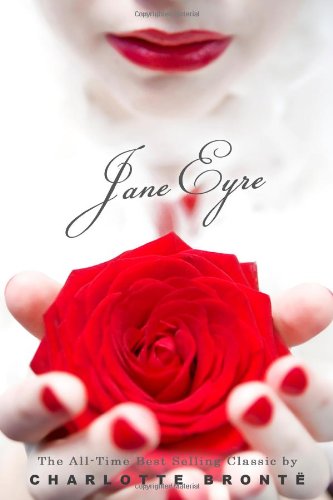
Another Twilight-ish Cover? This Time on Jane Eyre? WTF?!

We are told time and again not to judge a book by its cover.

But we hardly listen anyway.

Let's face it -- we are visual creatures. For the majority of us, the gift of seeing is so centric to our experiences that we would hate to be blind. It's why we make movie adaptations of books or make scrapbooks and photo albums. Just take into account the English language and the way we often substitute the word understand with see. Behold the following example:

"I don't understand the point of creating Twilight-inspired covers for classic literature when these covers have absolutely no relevance to the actual stories."

"I don't see the point of creating Twilight-inspired covers for classic literature when these covers have absolutely no relevance to the actual stories."

See what I mean? (Harr, harr.) The message is essentially the same.

So if we are to follow this logic, it would make sense that the first impression we get of a book is the way that the book's cover is visually presented to us.

I'm incredibly chagrined right now (yes, chagrined... a word in the English language that's been overly abused by SMeyer throughout the Twilight Saga. Hope she doesn't commit the same crime again in her other books). We all know the cover designs of SMeyer's books with the red, white, and black color motifs. In a previous post, I remarked on how annoyed I was that there is a Twilight-ish cover for Wuthering Heights. There are other classics that have fallen victim to this trend, such as Romeo & Juliet and Pride & Prejudice.

Just look at these covers:


Now I'm flipping annoyed at the brilliant morons responsible for trying to market Jane Eyre as THIS:


It has nothing to do with flowers, especially not red flowers. Ditto with the red lips and the red nail polish, and the eerie albino-ish skin. Don't get me wrong. I like this cover -- very much. There's something alluring about the contrasting vividness between red and white. It's pretty. I think this cover might work if the book was some kind of retelling of Snow White. That would be interesting then, to think about the story and how it relates to the cover insofar as symbolism is concerned.

But for a story like Charlotte Bronte's Jane Eyre?

It is, quite simply, a travesty.

It's like trying to market dangerously seductive blood-drinking demons when there really aren't any to be found in the book (sound familiar?). That would be false advertising.

And okay, I'm sure there's the argument that I should take a chill pill because these are fictional works I'm talking about, not some newfangled miracle drug that is really an epic failure in disguise. I get that there are plot twists that could surprise us, and could even possibly change our whole perspective on a particular thing (like impressionable tweens changing their  perceptions of antiquated bloodsucking ghouls as being the ideal soul mate). That's fine, really, because it's fiction. You're allowed to imagine what you want to imagine, so long as you are mentally stable enough to recognize the fine line separating your reveries from the reality of your situation.

None of the female characters in Jane Eyre even remotely resemble the anonymous woman on the cover. Not even the pretty Blanche Ingram (the woman that Jane was jealous of), who was described as having a lovely olive complexion. Bertha Mason was described as being of Creole descent, so I highly doubt that she'd look chalk white. Jane Eyre herself was plain governess (hence the term "Plain Jane") and had simple tastes, so she can't be the woman on the cover. Besides, what would a governess in the 19th century -- who refused to buy or wear purple and pink silk dresses that Rochester picked out for her -- be doing wearing bright red lipstick and crimson nail polish?

It's nonsense.

And what is the red flower supposed to represent anyway? "Bleeding Love," as Leona Lewis would call it?

I don't think so.

Jane certainly isn't as fragile or delicate as a flower, I'll tell you that. She's more like Tsuchi Makino (the protagonist in the Japanese manga/anime/drama "Boys Over Flowers"), whose name means weed. And no, I am not speaking of cannibis here. Rather, no matter how much you try to pull out a weed with your bare hands, it's still there. Persisting. Growing. Flourishing. The weed knows where its roots are and clings to the soil that it's known for so long, just as Jane (and Tsuchi Makino) knows her true self and clings steadfastly to her morality and beliefs despite the adversity she endures. Jane is determined as she is passionate.

Okay. Maybe red is supposed to represent passion, such as the passion that Jane and Edward Rochester feel for each other. (If you ask me, Rochester loses himself to passion way too many times to be called rational, given the nature of his misdeeds and his temperament).

Is their love supposed to be represented by the flower? The freakishly white lady on the cover looks like she's giving the flower as a gift, offering it to someone the way she would give them her heart (metaphorically speaking).

On the other hand, I still maintain that flowers represent fragility -- flowers easily wilt if not cared properly, they lose their petals, they can get crushed or shrivel up and die, etc. Just analyze Ophelia and her behavior during her madness speech just before she drowned herself in Shakespeare's "Hamlet," if you're still not convinced.

But I think that Jane and Rochester's love is stronger than that, so much so that they both hallucinated -- hearing each other call out the other's name -- on the same night (freaky coincidence or not?). And despite his misdeeds, Edward Rochester learns his lesson. Jane all the more loves him for it, and loves him even more despite his disfigurement. Meanwhile, Rochester loves Jane for her determination, her fierce loyalty, her honesty, and her sense of individuality. They're both not what most people consider physically attractive, but they have qualities that transcend outer beauty. If that's not true love, I don't know what is.

While we're on the subject of true love, riddle me this: Why do Bella and Edward love each other?

I still don't get that, aside from that Bella smells like flowers and Edward is nothing more than a sparkly, hard (double entendre totally intended, hehe) statue. That's lust, really.

I actually feel cheated, having read the series and the first book twice, that I cannot find any substantial evidence (specific examples) of this love the two supposedly harbor for each other. Edward strikes me as extremely controlling and psychologically debilitating (what kind of boyfriend, praytell, tampers with his true love's truck in order to keep her away from people he does not approve of?), whereas Bella (even though she sometimes rebels) lets him perpetually screw with her mind and whines about how craptastic her life is without her vampire lover. Sure, Edward can't read her mind. But he sure knows how to manipulate someone into following his orders (as in "No, you cannot see Jacob, Bella. I am perfectly capable of holding back my affections from you if you see that guy again. No more make-out sessions, and certainly no sexing until we are married!"). I don't know if Edward is really protecting his "virtue" (saying that he has a "virtue" is kind of debatable, given that I'm accusing him of manipulation). But I commend him for his abstinance views and his belief that sex is the ultimate expression of love. HOWEVER, Edward knew how much Bella was crazy for him and would pretty much do anything to get into his pants. So he traps her into marrying him. Even though she doesn't ever want to get married, given the backstory about her mother marrying straight out of high school and getting pregant (which happens to Bella later on, of course). That, to me, is manipulation at its finest. It's no better than tricking a guy into marrying you because you're pregnant, even though he doesn't love you and he's only doing what he thinks is the right thing.

So if anyone has any insight into why SMeyer's power couple love each other, please enlighten me and cite specific examples. There's nothing more annoying than a Twihard who types in chatspeak and treats the books as if they're the absolute word of God: "B3cuz d3y jusz do, okz?! N if u cnt ex3pt dat, ur jusz jeloz of bellz cusz sh3 got a hot vamp boyfr3n dat spaklz in deh sun n U DUNTZ! TRU LUV RULZ!"

How the heck can anyone take the above statement seriously?

Anyway, the point that I'm trying to make here is that we should strive to keep the integrity of well-loved classics alive. If a publishing company wants to release a new and updated edition of an old classic by changing the cover, then the cover design should at least have a degree of relevance to the heart of the story. Covers shouldn't be there to simply "prettify" the work of literature any more than the use of purple prose to "prettify" one's shitty writing. Covers should complement the written text in some way, and they should serve to supplement our understanding of a story.

Twihard tweens and Twihard moms might not mind buying this particular edition of Jane Eyre, because it reminds them so much of their favorite saga, even though the cover design has nothing to do with the story whatsoever. Sure, literacy rates have probably increased because people are rabidly gobbling up the Twilight Saga and the overly obsessed will want to buy anything that remotely reminds them of the series without blinking twice.

But that doesn't mean good literature should be sucked of its soul (pun totally intended).

This spoils the beloved classic for the rest of us who don't give a bat's guano over Edward's veggie vamp sparkle powers -- we're not that gullible. It is an insult to assume that consumers who buy the new edition (at least those who like to overanalyze what they read, like me) will overlook the significance of the cover art.

Because I do judge a book by its cover. I may not judge the cover when I first see the book, and the cover may not be the reason I purchase a book, but I do judge it. After reading a book, I think about the imagery and the motifs that pop up throughout the story, and I try to explain the significance of the cover design based on my knowledge and understanding of the story. If a book's cover is irrelevant to the integrity of the story, then consider this blogger one greatly disappointed bookworm.

Aiming for the 'Rock of Hope' When You're Stuck in the 'Reservoir of Go the Hell Home'

Yes. You read the title correctly.

"About 200 yards ahead, to your left, is a huge boulder. That's where you want to be. That's what us folks here at Delacorte theater call the 'Rock of Hope.' But where we are right now, where you guys are on the line -- you're in the 'Reservoir of Go the Hell Home.' "

That's what the cute John Krasinski look-a-like staff member at Delacorte Theatre said to us and to all the others at the back of the line hoping to score free tickets to Shakespeare in the Park's production of "The Merchant of Venice," starring Al Pacino as the moneylending Shylock.

The boulder was nowhere in sight (at least from where we were standing), so we were stuck in the "Reservoir of Go the Hell Home" and had absolutely no chance of getting those tickets. This reminded me so much of last year, when a few friends and I tried to watch "Twelfth Night" with Anne Hathaway cast as Viola of Messaline. The same guy kept telling us that we wouldn't be able to get tickets from that far back in the line (he was right). And yes, just like last year, people camped out in the middle of the wee early morning hours just to see a big-name actor perform in a free play in Central Park.

Mr. Pacino, why'd you have to be so legendary and iconic The Godfather and in Scarface?

Oh, well. The month's not over yet, so at least there might still be a chance.

We (Amy, Liliana, Liliana's sister, and I) decided to leave the line and GTFO. But we decided not to waste the day, so we sat in the grass for a while and just talked, catching up here and there on each other's lives and wishing that we could all study/vacation abroad. We didn't exactly have a Plan B, but thank goodness I always carry the Cool Pass (free admission for up to 5 people to almost any museum in NYC) with me, so we could spend the day trying to be productive.

We walked all the way to Whole Foods from 86th to 60th on the West Side (not as tiring as it sounds, trust me) and ate lunch there. We browsed a couple of stores afterwards. The conversation (thanks to Amy, hehe) kept bouncing back and forth between clothes and food (mostly food). Especially sushi, buffalo wings, and Jamba Juice. Even after we ate our lunch, the cookbooks at Borders just added more to our passion for food and encouraged us to at least try to have a well-balanced and healthy diet. I'm not so sure I could do without my cheese puffs addiction so soon. Baby steps, I guess.

I bought a book, too. Not a cookbook, but a rather funny retelling of 'Sleeping Beauty' that involves some sort of time traveling or dimension jumping or something like that. I have yet to read it, so I can't really say what's going on between the pages. But it sounds refreshing, and I'll try to give it a review later in another post.

We walked back up to 82nd, to the American Museum of Natural History, where we met up with my sister and got in with the Cool Pass. We strolled through the cultural anthropology exhibits. I never get tired of these exhibits -- even though I've been to that museum way too many times to count, there's always a new angle that comes along with thinking critically about the artifacts on display, especially when you think about perspective. For instance, why do the descriptions for some of the Plains Indian costumes in the Plains Indians exhibit sound like an ignorant and racist historian wrote them? A Wikipedia entry could probably have more substance and objectivity (har, har). 

Although, some of the exhibits (and the descriptions of artifacts within them) weren't that bad.

Still, it always makes you think twice about whether to take something at face value or continue to question it. Critical thinking is a craft that must always continue to be honed. Our brains are muscles, too.

Anyway, the guy at the park was right. He was trying to be funny, but I thought he came up with a pretty neat metaphor. You could apply it to anything, really -- if you're looking for a new job or internship, if you're trying to overcome your fear of bungee jumping, if you're in the process of writing a book, or if you're trying to analyze something and think outside the box.

So don't settle for the Reservoir of Go the Hell Home. Go out and do something that will bring you closer to that Rock of Hope.

It sounds kind of corny, but it could pass off as a decent mantra, couldn't it?

Tuesday, July 13, 2010

Telenovelas and Rewrites

I'll be honest. I haven't really gotten that far with recapping Wuthering Heights. At this point, I'm not sure I want to continue with it because it's a lot of work. Yes, I am getting very lazy.

But I assure you, there are other reasons.

Like getting totally immersed in watching Filipino telenovelas. My mother decided to try out TFC (The Filipino Channel) from a friend who happened to be a dealer of the network. So we started watching some shows.

I never thought I'd say this, but I'm hooked! So far I've finished watching "Crazy For You," and "My Cheating Heart." I actually started watching "Crazy For You" (a story about overseas Filipino workers who find love in Spain) years ago, on Youtube, but I only got 1/3 into the series because I couldn't find the other episodes online. So I was pretty bummed out about that. Now I sort of wish I didn't finish it because the ending just sucked the life out of me. After investing so much emotional energy in cheering for the lead couple and thoroughly enjoying the comically romantic moments, it ended on such a sad note (one of them died). My sister and I came up with an alternate ending, just to feel less depressed. "My Cheating Heart" (a story about a girl who does everything for her childhood best friend in the hopes of winning his heart) on the other hand, had a much better ending. The tables were turned, and there were so many plot twists that played out really nicely once you got toward the final episode.


My favorite right now, though, is a show called "Lovers In Paris" (based on a Korean drama). Usually, remakes aren't always that great, but in this case, I'll make an exception. Because it's exceptional! It's about this young woman who dreams of becoming a film director and making it big in Paris, who also falls for a rich businessman while working as his maid. I assure you, it's much more than just another Cinderella story. It's so breathtaking, the way the story is told and the complexity of each character, not to mention the awesome chemistry between the characters portrayed by KC Concepcion and Piolo Pascual (he's so dreamy!). I think they're dating in real life (so far as I've heard, hehe). They make a really cute couple. :)

[EDIT: There's a deux ex machina at the very end of the last episode, and while I'm thrilled -- hell, freaking ECSTATIC -- that there's a happy ending for the leading couple, I had to wonder if the screen writer for this telenovela just shot himself/herself in the foot and had to inhale a snuffbox of opium.]


Anyway. Enough about that. ;)

I've also been writing, working on new chapters in that novel I'm working on. So far, I've finished writing two chapters -- I'm currently working on another one while also trying to edit a horribly written chapter filled with purple prose.

What is purple prose? It's when you refer to the thesaurus so often to try to "prettify" your writing, so much so that your sentences end up looking like this:

"One smoky tendril lingered, a fragile wisp shining and reflecting the sun’s rays with a translucent sheen of its own. It relinquished its forceful embrace on my wrist, and almost reluctantly, sailed silently away from my arms. It spiraled delicately upwards, stirring the dust motes in the air, and seemed to dissipate."

I kid you not -- that up there was actually from the draft I've been working on. Horribly wordy, ain't it? I hate it, too. I'm going to have to rewrite that entire chapter, especially because it seems so strange and so out of character coming from my protagonist. She's usually blunt and speaks her mind a lot, so it doesn't make sense that she'd be narrating as if she was reciting poetry.

Besides rewriting that horrible purple prose disaster, I actually referred to the Twilight phenomenon in another chapter. The series goes by a different name (that I made up) in my story, but the idea that it's currently so ingrained in the cultural and social consciousness is still there. I used it to further the plot and to provide some sort of dramatic irony, dropping a certain hint about a certain character. But it still doesn't cross the protagonist's mind. If you're keen enough to find the hint (which I'm pretty sure you are), you'll have no problem figuring out its meaning. Not sure if I'm going to share that part of the book yet because I'm still in the middle of writing it. But if I do decide to share it, I'll keep you posted. ;)

In the meantime, enjoy this song called "Finish Line" by Fanfarlo. It's not on my story soundtrack right now, but I think I'm going to add it. The song makes me feel happy; it has that optimistic feeling to it. That's the feeling that I want to convey once I reach the end of the story. :)

"Finish Line" by Fanfarlo


Until next time, friends!

Friday, July 2, 2010

"I am no bird; and no net ensnares me..."

Okay, just as an aside, I took this quiz to see which classic female literary character I most resemble, and this is what I got:


I'm so glad I didn't get Catherine Earnshaw or Scarlet O'Hara!

Anyway, if you would also like to take the quiz, here's the link:
Which Classic Literary Female Character Are You?

Tackling 'Wuthering Heights' -- Chapter 7

I kind of read ahead, past Chapter 7, so I'm going to try to be as brief as possible here.

Cathy didn't come back to Wuthering Heights (I think I'm just going to refer to it as "the Heights" from here on out) until five months later, around Christmastime. She was able to walk again, healed from the dog bite injury on her ankle.

I'm guessing this is sort of where SMeyer also wants us to draw a comparison between Cathy and Bella. Because Cathy had come back, all right. She came back all decked out and purrrrty so everyone fawned over her and admired her for the beauty that she was. Just like all the guys in the Twilight Saga fumble and get all worked up over Bella because of how speshul she is as the New Girl.

If Bella's so plain, why do all the guys think she's so hot and date-worthy, to the point where it's like a competition between them? She doesn't have much of a remarkable personality, really. Her hobbies include scrubbing her dad's house spotless, watching marathons of Romeo and Juliet and wishing she was Juliet, admiring the way Edward sparkles, and of course, riding on Edward's back like some kind of infant monkey.

Well, this looks familiar:


Aww... how cute!

At least Cathy had a penchant for exploration, what with her running around and masterminding (together with Heathcliff) pranks to get old Bible-spewing Joseph cranky. And, Emily wrote that Cathy really was pretty, instead of playing it off as though plainness was a flaw as SMeyer did. So it's logical to think that people admired her greatly for her beauty, and that Edgar Linton and Heathcliff would develop mondo crushes on her.

Though, Bella and Cathy are both bratty in their own respective ways. You can argue that Cathy's youthful spunk can turn into impetuous and impulsive vanity, whereas Bella is just (because she lacks that youthful spunk, having been "born thirty-five years old") ungrateful whenever Alice (who's really the most awesome character in Twilight) takes her on a shopping spree or throws parties in her honor.

So just how bratty can Cathy get? You'll see what I mean soon.

So while everyone kept fawning over Cathy, Heathcliff kept his distance. Even if Hindley and the Lintons always shooed him away, Heathcliff probably would have stayed away anyway. He would have felt extremely inferior, having spent the entire day working in the fields and never getting the opportunity to freshen up. Maybe he thought his B.O. would gravely offend Cathy.

Anyway, here's where Cathy seems a bit... how shall I call it?

Two-faced.

Try to imagine Cathy as the rich, most popular girl at your high school, and Heathcliff as the hot loner dude that everyone thinks is poor. Cathy, of course, will hang out with the other popular people and pay Heathcliff no mind because her peers don't think that he matters. Then when everyone's left and no one's looking, Cathy would seek out Heathcliff and tantalize him with the hope of spending some alone time together.

BUT when everyone else from the in-crowd comes back, Cathy leaves Heathcliff. She pretends not to know him at all while entertaining the vain inanities of her so-called "friends." Cathy's really no better than a mean girl.

Poor Heathcliff! No wonder he's all screwed up!

Okay. Maybe I'm being too harsh on Cathy (and okay, so I've also been pretty harsh on Bella). Peer pressure is a persuasive fiend that seduces you into wanting to fit inside its lukwarm half-open embrace. But it's just as ready to toss you aside if you cross it.

(I'm skipping Lockwood's interruption of Mrs. Dean's storytelling. It's not that important.)

TO CHAPTER 8... AND AWAY!

Tackling 'Wuthering Heights' -- Chapter 6

It's been a bit of a while, and I've been multi-tasking. Reading some chapters, recapping them, and working on my own story, as well as convincing my sister to paint my toenails red in between. It's a doozy! But anyway, I got them done.

So, without further ado, Chapter 6 of Emily Bronte's Wuthering Heights...

Hindley, Cathy's brother, came back to Wuthering Heights for the funeral. And he brought his new little wife with him. He's feeling really high and mighty now because the estate now technically belongs to him, thereby making him the new "master."

Frances -- Hindley's wife, if you recall from Cathy's diary entry -- became the talk of the neighbors. Apparently, funerals really freak her out (my mom would probably concur, since she hates watching horror movies and hates thinking about anything that's dead). Frances confided in Mrs. Dean, aka "Nelly" (a new nickname that we learn in this chapter), that she was afraid of dying because of her coughing fits. Maybe Frances has tuberculosis? It's either that, or she's a hypochondriac who just can't help but fret over every little health issue. Who knows? Nelly proably thought the case was the latter.

Turning our attention back to Hindley...

He's out of shape. And he's meaner. Hindley bossed the servants around ("My daddy's not here anymore, so that makes me the new master, and you have to follow me even though I'm being a douchebag bully to you, otherwise I'll throw you out and you'll have no home whatsoever! Mwahahahahaha!"). He told them to sleep in the back kitchen and leave the house for him and his wife. Hindley wanted to redecorate, but Frances liked things the way they already were, so he dropped all plans of fixing the place up. If Martha Stewart had already been born, then I bet Frances would have jumped at the chance.

Frances loved doting on Cathy -- she treated her like a little doll. But then this would get old and Frances would get "peevish," while Hindley grew "tyrannical." The lovebirds really do deserve each other, don't they?

Anyway.

Hindley forced Heathcliff into the servants' quarters, denied him of getting educated, and insisted that Heathcliff work in the fields like a common farm hand. Heathcliff, meanwhile, handled his situation well because Cathy would teach him what she learned and would would spend time with him in the fields. Whenever they got into trouble with Hindley, they would run away into the moors together and spend the entire day there, only to return very late. It was as if being together was the cure for their misfortunes.

It sounds very sweet at first. Until something happens that changes everything, turning Heathcliff's world inside out and upside down, as he then tells Nelly what happened...

One evening Cathy and Heathcliff were out in the moors when they decided to spy on Edgar Linton and his sister, Isabella (mmhmmm... Is this where SMeyer subconsciously got the name for her protagonist?). It was really all just for the "lulz." Just for laughs. And boy, was this a pathetic sight!

Edgar and Isabella had been fighting over a dog, over who deserved to cuddle with it. These kids were like, pre-teens (age 11 or 12), mind you. They'd nearly ripped the poor, yelping puppy into two. Savage!

One moment they were sniveling, and the next, you could have sworn their ears pointed up like this fellow, masquerading as an overly alert bunny rabbit:


They heard Cathy's and Heathcliff's snickering laughter. The two pranksters then proceeded to make "frightful noises to terrify them still more."

Edgar and Isabella alerted the servants. As Cathy and Heathcliff tried to run away, Cathy's foot got caught in the guard dog's mouth. She told Heathcliff to run ahead without her. (The guard dog's name, by the way, was  Skulker... that sounds scary, but way cooler than just calling it "Rex" or something ghastly cliched as "Spot." I wonder if Emily had a dog named Skulker.)

Then a servant came out, carried Cathy inside, and told Mr. and Mrs. Linton what all the hubbub was about. The Lintons recognized Cathy as servants tended to the girl's bleeding foot and ankle. They were shocked to find out that her BFF was an unruly-looking gypsy boy. LIKE, OMG, GASP!

Heathcliff, being the sweet little romantic rascal that he was as a pre-teen, refused to leave Thrushcross Grange without Cathy by his side. But they sent him off on his own into the cold, windy night with nothing but a lantern to guide his way. The moors probably look extra creepy at night.


Poor Heathcliff (I dare you to count off how many times I say "Poor Heathcliff" throughout my other chapter recaps)... I really do feel sorry for him. I want to hug him and tell him to kick to those mean people in the shins the next time he sees them.

Meanwhile, the Lintons were all over Catherine. In Heathcliff's words:

"They dried and combed her beautiful hair, and gave her a pair of enormous slippers, and wheeled her to the fire; and I left her, as merry as she could be, dividing her food between the little dog and Skulker, whose nose she pinched as she ate; and kindling a spark of spirit in the vacant blue eyes of the Lintons -- a dim reflection of her own enchanting face."

Maybe the Lintons felt guilty that their stupid Skulker (which I imagine to be a rowdy pitbull or rottweiler) bit little Cathy's foot and might possibly give her rabies or some awful canine disease. Perhaps Cathy might never walk again! Then she can no longer go outside and explore the moors with Heathcliff, leaving the poor guy all alone with no one decent to talk to! OMG! And then she'll fall for Edgar Linton instead, breaking Heathcliff's already overly-abused and battered heart!

NOOOOOOOOOOOO!!!!!!

Okay. I managed to get a grip. But it's clear that Heathcliff has a bad feeling about how things are going down, and you can sense the depth of his bitterness:

"I saw they were full of stupid admiration; she is so immeasurably superior to them -- to everybody on earth, is she not, Nelly?"

From then on, the Lintons and Hindley and his trophy wife Frances tried to keep Cathy and Heathcliff apart.

I'll say it again: Poor Heathcliff!

TO CHAPTER 7... AND AWAY!

Saturday, June 26, 2010

Tackling 'Wuthering Heights' -- Chapter 5

Mr. Earnshaw, Cathy's and Hindley's dad, was weakening in his health and was confined to one room. He grew irritable, especially because he knew people resented him for taking in and caring for the gypsy-looking orphan boy Heathcliff. Paranoia at its finest.

Hindley, of course, grew even more jealous when the servants paid more attention to Heathcliff because they were trying to placate Mr. Earnshaw. Hindley's unruly behavior toward Heathcliff got so bad that Mr. Earnshaw had to send Hindley away to college to keep peace in the house.

As for Joseph, Mrs. Dean called him "the wearisomest self-righteous Pharisee that ever ransacked a Bible to trake the promises to himself and fling the curses to the neighbors." That's a brilliant description of the preachy old prick! Anyway, Joseph kept bothering Mr. Earnshaw about Heathcliff and Cathy, ratting them out and getting them into all sorts of trouble.

Cathy, on her part, was always hard-headed and difficult to control as a little girl. Always in mischief -- "a wilde wicked slip she was." But her cuteness as a kid and her beauty as a young woman made it hard for people to stay mad at her for too long.

"She was much too fond of Heathcliff. The greatest punishment we could invent for her was to keep her separate from him: yet she got chided more than any of us on his account."

How adorable... except that they're being raised as brother and sister. Not that Cathy and Heathcliff are blood-related. But it's still awkward. I guess I can kind of see how Cathy and Bella are similar in that quote. Both feel pretty darn lost without their men doting on them 24/7. There's a phrase for that nowadays: clingy.


They're on the fast track to insanity if they don't watch it. Well, with Bella she already lost her marbles when she cliff-dived and expected that Edward (the imaginary voice in her head) would save her. Either that, or she felt utterly worthless without her sparklepire and truly wanted to die. Behold the following image:


I predict Cathy will go mad when she realizes that she could never truly be with Heathcliff for the rest of her life. I wonder how Bronte will present that scene, if Cathy does indeed go insane.

Oooooh... Check this passage out:

"She was never so happy as when we were all scolding her at once, and she defying us with her bold, saucy look, and her ready words; turning Joseph's religious curses into ridicule, baiting me [Mrs. Dean, housekeeper], and doing just what her father hated most -- showing her pretended insolence, which he thought real, had more power over Heathcliff than his kindness: how the boy would do her bidding in anything, and his only when it suited his own inclination."

So Cathy would get a kick out of arguing and winning each time -- she reveled in outsmarting those who would chide her for her antics. Heathcliff must have been really been in love with her, even when they were both little children. He seems all-too-willing to be Cathy's lackey.

I kind of respect Cathy for her rebellious tendencies. However, I still have my reservations regarding her character. I also predict that aside from her going mad, Cathy's rebellious streak will morph into full-on catty behavior and manipulation.

Anyway, back to the story --

Mr. Earnshaw died. Cathy and Heathcliff were distraught, wailing when they discovered they were both orphans. Sucks for Heathcliff, having his adoptive father die. We see a little moment of sweetness when Cathy and Heathcliff tried to console each other:

"I ran into the children's room: their door was ajar, I saw they had never laid down, though it was past midnight; but they were calmer, and did not need me to console them. The little souls were comforting each other with better thoughts than I could have hit on: no parson in the world ever pictured heaven so beautifully as they did, in their innocent talk: and, while I sobbed and listened, I could not help wishing we were all there safe together."

Awwwww... Young, innocent love.

How theirs will unfortunately turn sour. This is silly of me, but I really think that Lady Gaga's hit song "Bad Romance" should be the theme song, if some production team ever decided to adapt teh novel into a soap opera. Maybe it should be called "Weathering the Heights."

Or "Passion: Romance and Revenge." Better yet... "Romancing Revenge."

Interesting titles, wouldn't you say? Well, even if they're tacky, I'm having way too much fun with this!

TO CHAPTER 6... AND AWAY!

Thursday, June 24, 2010

Tackling 'Wuthering Heights' -- Chapter 4

Ms. Emily Bronte --

The main reason I avoided reading your novel when I was 13 was because of Lockwood's blunders with dogs and his stupidity in mistaking a pile of dead rabbits for cute, cuddly kittens. Lockwood, as a character, is just an unnecessary presence whose clumsy awkwardness and inability to get a freaking clue is just an embarrassment to the rest of us human beings. Do you truly hate your readers that much that you must bore us first before getting to the good stuff? We have incredibly short attention spans! Don't be a tease! Just jump into the juicy parts, why don't you?

At least, now we're getting somewhere!

You could argue that Chapter 3 should have been the start of the story, but for me, perhaps it should have been a sort of prologue. The REAL start of the story, I would say starts in Chapter 4. Mrs. Dean, the housekeeper, tells Lockwood about what had happened at Wuthering Heights. We finally get to learn who the people that inhabit the estate really are, and the reasons for their lackluster and hostile personalities. Mrs. Dean had been living in Wuthering Heights for 16 years, so there's bound to be some juicy stuff she's witnessed.

But before we plunge into the story, let's take a couple of steps back first so we don't get confused with who's who and who owns what and who screwed over who and... well, here it goes:

So Heathcliff owns Thrushcross Grange and Wuthering Heights. He's extremely rich, but he doesn't spend any money on renovations to fix either place up. Maybe he's trying to pull a moldy and cobwebby Miss Havisham stunt (from Dickens' Great Expectations) by just letting everything dilapidate on their own because he's too busy being miserable and sour to care or notice. Or maybe it shows that he longs for the past because that's when he felt most alive. Otherwise, the dilapidated conditions of the estates represent his own ruin as a person, the ugly part of him that's torn and broken.

Anyway.

Heathcliff had a son, but his son died. His son was married to the young lady, Catherine. Catherine Linton -- not to be confused with Catherine Earnshaw Linton. Both were obviously mother and daughter. That's got to be pretty awkward for Cathy the younger, knowing that your father-in-law had the hots for your mom.

Meanwhile, Hareton Earnshaw was Catherine Earnshaw Linton's nephew. Hareton is younger Cathy's cousin.

Heathcliff's son was also Catherine the younger's cousin (ugh!) because Heathcliff had married the sister of Catherine Earnshaw Linton's husband. In other words, Heathcliff married Catherine the elder's sister-in-law. Why he did that is beyond me... Unless he did it to get back at Cathy the elder for dumping him. But this would still be f***ed up on sooooooooo many levels!

I think we've already established that it's a confusing family tree. Thank goodness no one marries their cousin anymore! Geez!

Cathy Linton (the younger one) is the last of the Lintons, and Hareton Earnshaw is the last of the Earnshaws. The Earnshaws used to own Wuthering Heights, whereas the Lintons used to own Thrushcross Grange.

So, on to the story...

Cathy and Hindley Earnshaw were brother and sister, and Hindley was 8 years older than Cathy. Their father was supposed to go away on some business trip, and he promised to bring back some spiffy presents for his kids.

But instead, he brought home a dirty beggar boy and decided to adopt him. Just imagine the look on Cathy's and Hindley's faces when they heard, "SURPRISE! YOU HAVE A NEW BROTHER NOW! BE NICE!"

It's like dropping a silent but fatal fart bomb on someone's head.

Of course, Cathy and Hindley were not thrilled, especially because they now had to share their room and their toys with this snot-nosed gypsy kid that their father randomly plucked off the street to raise as his own son. This street urchin was baptized and named "Heathcliff." In Mrs. Dean's words, "It was the name of a son who had died in childood, and it has served him ever since, both for Christian and surname." At first it sounded like he'd have a name like "Heathcliff Heathcliff." How dreadful. But then I thought about celebrities like Madonna, Prince, Pink, or Akon, who are known by just the one name (well, their stage names). Then I was like, OHH, I SEEEE...

Heathcliff -- a man without a history, a future, but a man nonetheless, who's just trying to make it through the present.

Sounds pretty sexy if you ask me. Until you realize how he ends up, if you recall from Chapter 3. That's right. Hysterically calling out the name of his long-lost beloved who may or may not be (to our knowledge) dead in the middle of the night. Depression? Bipolar disorder? Schizophrenia? Borderline personality disorder? Antisocial disorder? All quite possible. This guy needs a shrink.

Heathcliff was always "sullen... hardened, perhaps, to ill-treatment." Hindley always bullied Heathcliff, to show that he was better and more worthy of respect than Heathcliff. And I was right: Hindley tortured Heathcliff because he was jealous that his father treated Heathcliff with more favoritism. The two boys even got into a fight over who deserves to own a horse. No matter how badly Hindley beat up or insulted Heathcliff, the orphan boy always walked away with a sense of dignity, despite defeat.

Heathcliff's got swag. ;)

OHHHHH, and I just found out there's going to be an upcoming film adaptation of Wuthering Heights! Even though I know the sudden sparked interest is due to SMeyer's books' popularity, I'm still looking forward to watching it. I think it's coming out next year. Can't wait!

TO CHAPTER 5... AND AWAY!